

Complete Food Panel (IgG4) - 240 Foods
Are you living with a food intolerance?
A food intolerance response takes place in the gut, and it occurs when you are unable to properly break down the food. This could be due to enzyme deficiencies, sensitivity to food additives or reactions to naturally occurring chemicals in foods. Often people can eat small amounts of the food without causing problems. The results are best used as a discussion point with a qualified practitioner who can interpret them alongside your symptoms and history rather than as a stand-alone diagnosis.
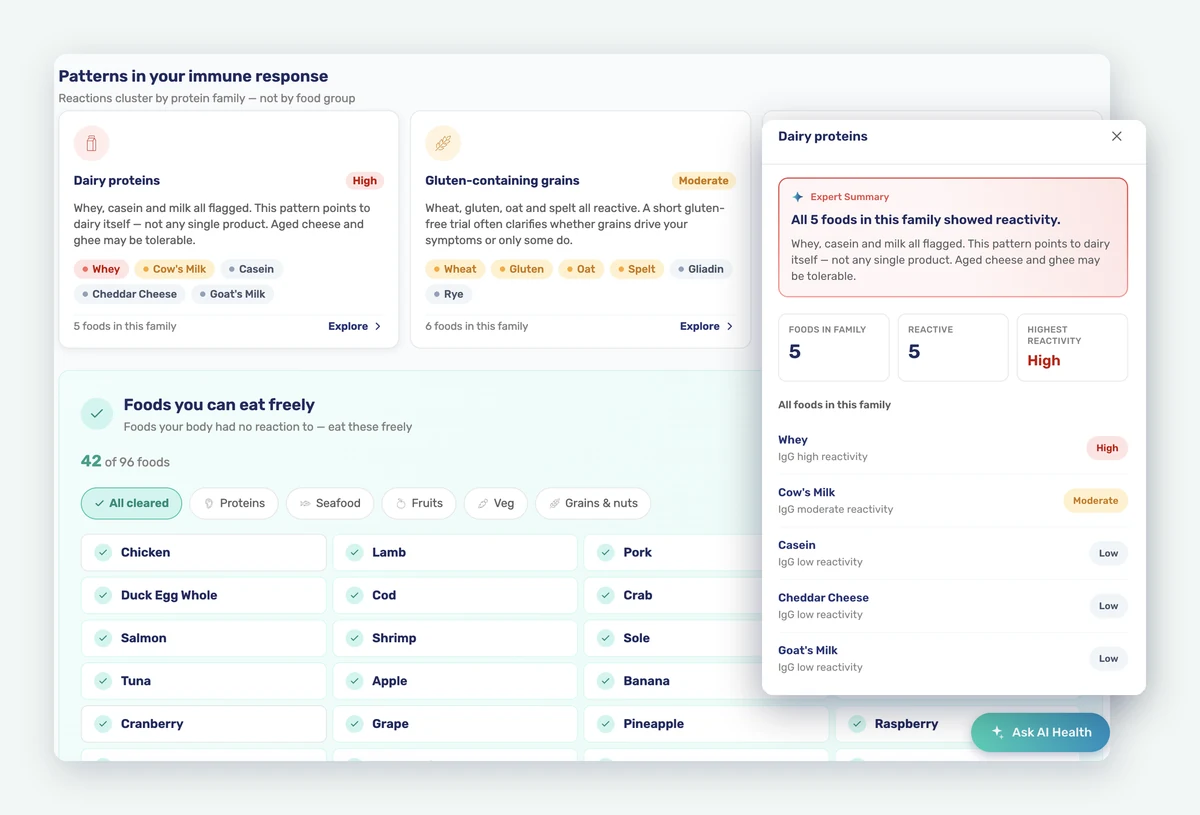
Our food intolerance range assesses your antibody response to the foods you eat. Choose the panel that suits your diet - from a focused 96-food screen up to our most comprehensive 240-food assessment - with options weighted toward Western, Asian or plant-forward diets. Your sample is screened using the ELISA method, and you can select the antibody marker that fits your needs: IgG for delayed-type responses, IgA for mucosal gut-lining responses, an IgG + IgA combination for the fullest picture, or our IgG4 subclass option. View our Guide to Food Intolerance Testing for more information.

Our broadest food assessment
The Complete Food Panel screens 240 foods — an extensive assessment for people who want the widest possible coverage. It is typically chosen by those who have already trialled elimination diets without clear answers, people with very varied or specialty diets, and clients working with a practitioner who wants the fullest possible dataset.

IgG4 - a specific subclass
IgG4 is a specific subclass within the broader IgG family. This option measures your IgG4 response across the panel you choose, and is usually ordered on a practitioner's recommendation. If you are not sure which marker you need, the standard IgG panel is the more common starting point.
IgG4 reflects your body's antibody response and exposure to a food. It is a guide to work through with a practitioner, not a diagnosis on its own, and it is different from IgE allergy testing - it does not diagnose a food allergy or coeliac disease.

Your results also come with a suggested Personal Rotation Diet Guideline designed to reduce food sensitivities, enhance nutrient diversity, and support gut health. This involves rotating different food groups every 3–4 days to minimise immune system reactivity, prevent overexposure to specific allergens, and promote a diverse gut microbiome.
Following receipt of your results, consider a teleconsult with our dietitian for nutrition and meal planning advice in the context of your current health goals.

